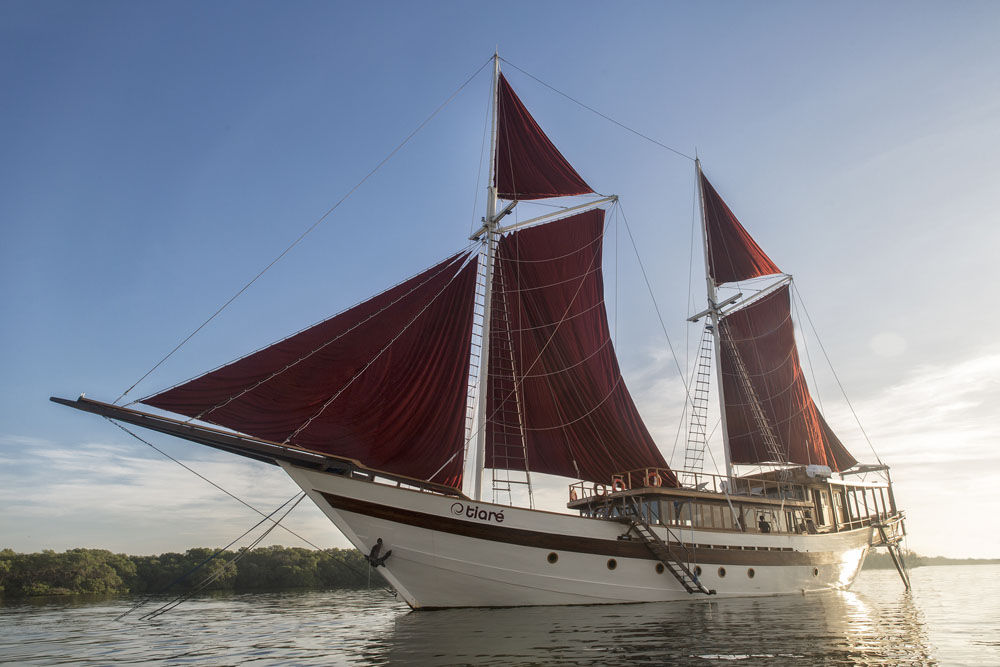
日程安排
A seamless combination of macro, wide-angle, pelagic encounters, and world-class reef diving. Cultural visit to a traditional village in Alor, featuring local dances and handmade crafts. Historic exploration of Banda Neira, including the iconic Fort Belgica and Spice Islands heritage. Schooling hammerhead sharks (seasonal) in the Banda Sea and occasionally in Alor. Extraordinary macro encounters: rhinopias, mimic octopus, pygmy seahorses, Ambon scorpionfish, ghost pipefish, and more.
This itinerary combines exceptional diving with meaningful cultural and historical moments across Indonesia’s remote islands. From the vibrant reefs of Maumere and Alor—plus a visit to a traditional Alor village—to the dramatic walls of the Forgotten Islands and the pristine Banda Sea with its seasonal hammerheads, each stop offers something unique. A visit to Banda Neira and Fort Belgica adds a touch of spice-trade history before the trip ends in Ambon, home to some of the best muck diving and rare critters in the region. It’s a well-rounded adventure that blends pelagics, macro, reefscapes, culture, and history in one unforgettable journey.
Activities Offered:
- Diving up to 4 times a day.
- Historic land tour in Banda Neira (Fort Belgica & Spice Islands walk).
- Cultural village visit in Alor. Underwater photography opportunities (macro & wide-angle).
- Volcano and reef exploration, Relaxation, and scenic cruising through remote islands.
- Beach BBQ (If the weather permits).
Sample Itinerary
Day 1:Maumere
Day 2: Tanjung Bacatan (4 dives)
- Dive Tanjung Bacatan and Lewaling Bay at the island of Kawula. Three dives along the walls and ledges covered in sea fans and soft coral.
- Tanjung Bacatan is a good place to spot whitetip, blacktip, and occasionally grey reef sharks. Also a popular spot for eagle rays and napoleon wrasses with loads of schooling fishes, chances for pygmy seahorses, and small critters. A great muck night dive will be done in front of a traditional fishing village.
Day 3: Alor - Pantar Strait (4 dives)
- Pantar Strait, the channel between Alor and Pantar, is ringed by the islands of Ternate, Reta, Pura, and Treweg. The region features dramatic walls, pristine coral gardens, colorful fringing reefs, black-sand slopes, and excellent muck sites with rhinopias, fire urchins with Coleman shrimp, and zebra crabs. Strong currents through the channels bring pelagic action and superb visibility. Water temperatures vary from 27°C in the north to 21–25°C in the south.
- Yan Village: There are several wonderful spots to dive. Walls covered in sponges topped with shallow hard coral reefs, where you can spot the elusive Mandarin fish, to black sandy slopes where fans of macro will get their fill, too. Some examples of the critters here are frogfish, weedy scorpionfish, all sorts of nudibranchs, and yellow, blue, and black ribbon eels.
- Clown Valley: One exceptional dive site on Pura Island is probably the only place in the world where you will see this phenomenon. The entire reef is completely covered in anemones of all shapes and sizes. Enjoy a drift dive along this site and enjoy the abundant fish life, with thousands of colourful anthias and damsels dancing off the reef. Take a look at photos of Clown Valley and other wide-angle opportunities in Alor here.
Day 4: Alor - Kalabahi Bay (visit traditional village and 2-3 dives)
- We will begin the day with a visit to a traditional village on Alor Island, where locals will perform cultural dances, and guests can purchase beautiful handmade crafts.
Inside Kalabahi Bay, sites like Mucky Mosque and Rocky Church offer some of the best muck diving in Indonesia. This area is known for the “holy grail” rhinopias (both weedy and paddleflap), along with ghost pipefish, soft coral crabs, frogfish, wunderpus, mimic octopus, snake eels, sea moths, sand divers, and many other rare macro creatures.
Day 5: Wetar (3 dives)
- In Wetar, you will dive the small island of Reong and at Cape Nunukae.
Pulau Reong is a small island on the northwest coast of Wetar and is separated by a small channel only 700 metres wide. More walls, like many of the dive sites in the Banda Sea, are covered in small soft corals but of a great variety in colours, with zillions of various triggerfish. - Cape Nunukae, about 6 nautical miles southwest of Pulau Reong, is a large ridge with soft corals on the slopes in the deeper areas. There can be a strong current at the end of the ridge, where large aggregations of schooling fish can be found.
Day 6: Terbang Utara & Terbang Selatan (3 dives)
- Today you will dive several small islands – Neus Leur, Terbang Seletan, and Terbang Utara. The island of Damar and its three surrounding small islands have spectacular diving. Like many dives in the Banda Sea, there is crystal clear water and beautiful walls covered in massive sponges and beautiful soft corals.
Day 7: Nila Island (3-4 dives)
- Surrounding Nila Island, there are two atolls, Dusborgh and Nil Desperandum. Its’s at these two atolls that there is a good chance of seeing hammerhead sharks. Even without the hammerhead sharks, the reefs are fabulous, with healthy walls and big schools of fish.
Day 8: Serua Island (3-4 dives)
- Serua Island is probably one of the most emblematic spots in the Banda Sea to see schooling hammerhead sharks. Also, an amazing side to see schooling fishes such as big eye trevallies, pinjalo snappers, and others.
Day 9: Manuk Island (3 dives)
- Manuk, also known as the Snake Volcano. If the weather permits, we will spend a day diving in this unique and isolated island.
- Manuk is the eastern-most volcano of Indonesia and presents two very unique highlights above and below the water. Topside, it is possible to revel in the spectacle of thousands of seabirds, including comical yet beautiful frigate birds and boobies. The sight is unforgettable. One of the few phenomena able to rival that display is the vision of a dozen sea snakes undulating and swimming underwater. Some divers have even been lucky enough to watch them hunting in a pack. It is thought that the warm geothermal vents present in these waters attract these cold-blooded creatures in large numbers. In addition to these singular wonders, the island’s reefs are also stunning, and there is a good mix of coral-covered walls and slopes in all colours and sizes. Besides an outstanding variety of reef fish, you may also see some tuna, jacks, and even hammerheads.
Day 10-11: Banda Islands (3x dives)
- Suanggi Island is famous as one of the big-fish hotspots of the Banda Sea. The site features steep walls, deep drop-offs, and seamount structures that attract hammerhead sharks, mobula rays, and large schools of barracuda. The currents here can be strong, bringing nutrient-rich water and creating the perfect conditions for pelagic encounters. The reef is rugged and dramatic, with large sponges and sea fans lining the wall.
Day 12: Banda Islands (Land excursion and 2-3 dives)
- Most widely known as one of the main stops along the old spice route, the Banda Islands are an isolated group of islands in the midst of the wide expanses of the Banda Sea. The remoteness of these islands has given them a fascinating, colorful history, including the fact that it was once the only place in the world where nutmeg grew! This morning, the boat will sail to Banda Besar while you enjoy the. breakfast. Afterwards, we will visit Belgica Fort, initially constructed in 1674, which played a critical role in the Spice Trade and routes. We continue to see modern-day nutmeg harvesting and the opportunity to meet the local inhabitants on the island. Lunch will be served on board.
- Afternoon dive at Lava Flow - Gunung Banda Api. Also known as the ‘Fire Mountain’, Banda Api’s eruption and seaward lava flow in 1988 led to a rebirth of coral and marine life so quickly it astounded marine biologists everywhere. By 1994, they noticed that underwater thermal springs and nutrients of the cooled volcanic lava had kick-started the growth of spectacular underwater gardens.
- Banda Jetty: The sunset dive in the harbour can prove to be one of the best sites in the world to see Mandarin fish. In the very shallow water, among the stones from old, collapsed sea walls and jetties live many Mandarin fish. We will jump in just before dusk, and they will ‘walk’ around on the rocks right in front of you preparing for the nightly mating ritual. Be patient, you may get lucky and see them flutter up off the reef, cheek to cheek. If you’ve had enough of the Mandarin fish, the rocks and volcanic sandy bottom are also covered in other macro critters.
Day 13: Nusa Laut / Pulau Molana (2 dives)
- Molana Wall: We will do the first dive at Molana Island. This shallow wall breaks in places where you can find ribbon eels in the sandy slopes. On the wall, look for small pipefish and moray eels. On top of the reef, turtles might be seen feeding in the beautiful coral gardens.
- Amet Reef: Even though it is located only a few hours away from Ambon, Amet Reef at Nusa Laut presents quite different scenery and is the best example of the positive effects of a village taking care of its reef. The reef remains as unspoiled as it was hundreds of years ago. The locals have taken steps to protect it, and the result is an outstanding site that is the favourite of many dive enthusiasts.
- There are white tips and grey reef sharks patrolling the depths, and playful turtles can be spotted as well. Look out for the big group of bumphead parrotfish munching on the reef. For the very luck, you hammerhead sharks and dugongs have occasionally been spotted here. We will do two dives here before heading to the Banda Islands.
Day 14: Disembarkation in Ambon
- After breakfast and a group photo with all the crew, our team will transfer you by tender to the port, where we will personally assist and escort you all the way to the airport or your local hotel.
Marine Life: Seasonal schooling hammerhead sharks, reef sharks, mobula rays, and large pelagics, vibrant coral reefs, seamounts, and volcanic formations, rhinopias (weedy & paddleflap), ghost pipefish, frogfish, mimic & wunderpus octopus, pygmy seahorses, Ambon scorpionfish, turtles, bumphead parrotfish, barracuda, fusiliers.
The last dive will be on the penultimate day of the trip. Divers are recommended to wait for 24 hours before flying after the last dive.
Sample itineraries and maps are for illustrative purposes only, and the exact route and sites visited may change based on local regulations, guest experience, weather, and logistics at the Captain’s discretion.